
Ultherapy in Korea: A Dermatologist's Honest Guide to Who It's Actually For
A quick hello before you scroll
Hi, I'm Dr. Min Jeong, the founding director here at REDI in Seoul. If you've been researching Ultherapy in Korea, you've probably seen a lot of bold promises — and a lot of confusing before-and-after photos. I'd like to give you something different: an honest, dermatologist's-eye view of what this treatment actually does, who it genuinely suits, and who might be better off with something else. Please read to the end, because the most important part isn't the machine — it's whether it's right for your face.
What Ultherapy actually is (and what it isn't)
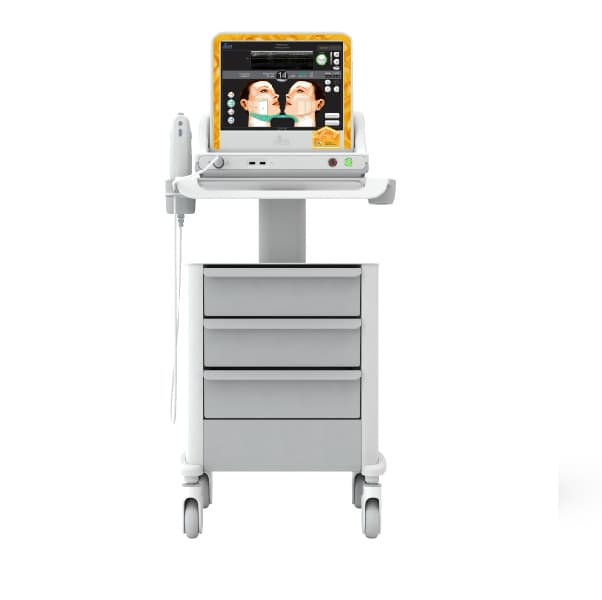
Ultherapy Prime is a globally validated, non-surgical lift. It delivers focused ultrasound energy precisely to the deep SMAS layer — the very same layer a surgeon addresses in a surgical facelift — to contract the tissue that drives sagging and gently lift your contour, without any incision.
Here's the part I always emphasize in my consultation room: Ultherapy is not an instant transformation. It works by stimulating your skin to build new collagen, so the lift settles in gradually. You may feel a subtle tightening right away, but the meaningful change develops over about 2 to 3 months. If someone promises you a dramatic "10-years-younger" result the moment you step off the treatment bed, please be cautious — that's not how ultrasound lifting honestly works.
It's an elective, non-insured aesthetic treatment, and results vary by individual.
Who Ultherapy in Korea is genuinely for
In my experience over years of treating a wide range of faces, Ultherapy shines for people bothered by a softening jawline, neck, or the eye area who want to refine the contour without surgery. If your main concern is a loss of definition along the lower face — that "melting" of the jaw and a fuller neck — deep ultrasound is one of the most reliable tools we have.
There's a simple self-check I share with patients. Look in the mirror and gently lift your cheeks upward with your fingers.
- "That lift looks great — I look younger!" → Your deeper structure has softened. This is exactly the kind of concern Ultherapy's SMAS-level energy is designed to address.
- "Even lifted, the surface skin still looks crepey." → Your concern is more about fine, surface texture and thin skin. Ultherapy alone may under-deliver here, and a different approach (or a combination) usually serves you better.
That honesty matters. I'd rather tell you Ultherapy isn't your best option than take your money for a treatment that won't meet your expectations.
The REDI approach: diagnosis before intensity
A premium device is only as good as the plan behind it. The single biggest factor in whether Ultherapy becomes a satisfying treatment or a disappointment is who designs it, and how it's delivered across your specific face.
At REDI, we diagnose your skin thickness and degree of laxity first, then design the depth and the number of shots accordingly. I don't believe in simply "maxing out" intensity or shot count — I prioritize a lift that is both safe and genuinely noticeable, tailored to where your face actually needs it. Different regions of your face have different skin thickness, and the treatment plan should respect that.
The treatment itself takes roughly 45–60 minutes. There can be a brief sensation as the SMAS layer is stimulated, which we manage with numbing cream and cooling throughout.
Ultherapy vs. RF lifting: not a rivalry, a matching problem
One of the most common questions I hear is, "Ultherapy or something like Thermage-style RF — which is better?" It's genuinely the wrong question. They target different things.
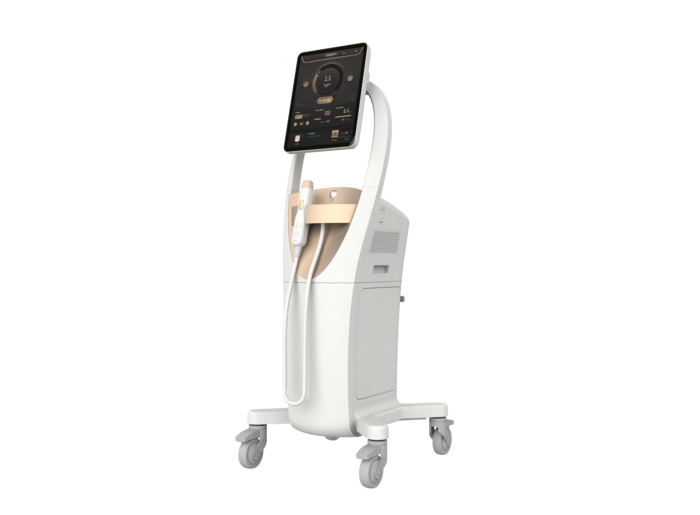
- Ultherapy (ultrasound): reaches the deep SMAS layer — strongest for lifting a sagging contour. Some patients find the sensation more intense.
- Density (radiofrequency): delivers energy at multiple depths for firmness and contour, and generally feels more comfortable with a more immediate tightening feel.
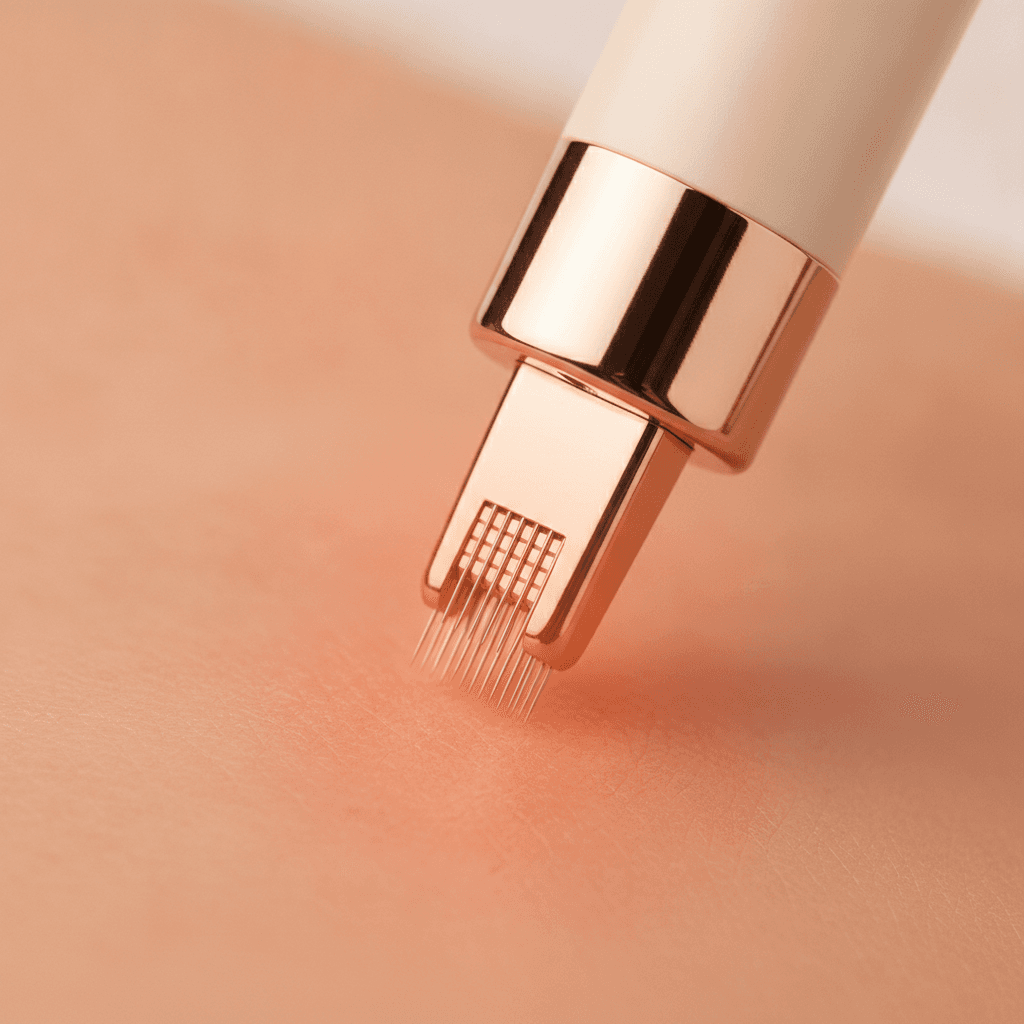
- Exion (microneedle RF + AI-controlled energy): for those who want to address laxity, pores, and fine texture together. It can involve a bit more downtime — mild redness that usually settles within 1–2 days.
For patients whose surface texture is the concern rather than deep sagging, ultrasound alone isn't the answer, and I'll say so. In some cases, combining approaches gives the most complete result. We recommend the best fit only after diagnosis — never before we've looked at your skin.
If you're flying in: a realistic timeline
For international patients, the real question isn't just "does it work" — it's "how does this fit my trip?" Here's how Ultherapy typically maps onto a travel schedule. Downtime is minimal, but everyone recovers differently, so treat this as a guide, not a guarantee.
- Day 0 (treatment day): About 45–60 minutes in the chair. You may feel mild tightening and see slight redness that usually settles within hours.
- Day 1–2: Any minor redness typically fades. Most people are comfortable returning to normal activity — and this is often when patients feel ready to travel.
- Week 1–2: Life carries on as usual. There's no dramatic visible change yet, and that's expected.
- Month 2–3: The collagen-driven lift settles in. This is when you'll see the contour refinement, back home rather than in Korea.
Because the meaningful result appears well after you've flown home, I always plan the treatment date around your itinerary during your consultation.
A few practical notes: we have English- and Chinese-speaking interpreters on site, so you never have to navigate your appointment alone, and I personally handle everything from your consultation through the treatment itself. We also offer airport pickup and online aftercare once you're back home — if anything feels off, you can reach us and we'll guide you. On pricing, I don't publish fixed numbers here because your plan is individual; we discuss it transparently at your consultation.
A note on the "key doctor" designation
You may see REDI described as an Ultherapy Prime key doctor clinic, and I'm proud of that recognition. But I want to be straightforward: designations like this are granted by device companies and carry no legal standing. They reflect experience with a device — not a promise of a specific outcome for you. What matters for your face is a careful diagnosis and an honest plan.
Takeaways
- Ultherapy Prime is a non-surgical, ultrasound-based lift that targets the deep SMAS layer to refine a sagging contour — best for a softening jawline, neck, and eye area.
- It's gradual, not instant: expect the lift to develop over 2–3 months, with results typically lasting about 1–1.5 years. Results vary by individual.
- Downtime is minimal (about 1–2 days), so many visitors feel comfortable flying home shortly after — but the visible change appears later, back home.
- The device isn't the deciding factor; diagnosis is. If your concern is surface texture rather than deep sagging, Ultherapy alone may not be your best option, and I'll tell you honestly.
- International patients get on-site interpreters, airport pickup, and online aftercare, with me handling the consultation and treatment personally.
Frequently asked
When will I see results after Ultherapy in Korea?
You may feel a mild tightening right away, but the real lift develops gradually over about 2–3 months as your own collagen regenerates. It is not an instant, dramatic change — it settles in naturally.
How long do Ultherapy results last?
Results typically last about 1 to 1.5 years and vary by individual. Because it works by stimulating collagen, periodic maintenance is recommended to keep the effect.
Is Ultherapy painful, and is there downtime?
There can be a brief sensation as the deep SMAS layer is stimulated, which we manage with numbing cream and cooling. Downtime is minimal — usually 1–2 days — so most visitors return to daily life quickly.
How is Ultherapy different from RF lifting like Density?
Ultherapy uses focused ultrasound to reach the deep SMAS layer, while Density uses radiofrequency. RF generally feels more comfortable with a more immediate tightening sensation. We recommend the best fit only after diagnosing your skin.
Can I fly home soon after Ultherapy?
Because downtime is minimal, many patients feel comfortable flying within a day or two. We still plan your treatment date around your travel schedule during your consultation. Results vary by individual.

Dr. Min Jeong
Founding director, REDI Dermatology · Seoul
“A treatment isn’t shopping. I’d rather diagnose first and recommend only what your skin genuinely needs — the same way I’d advise my own family.”
Board-certified dermatologist — trained at Kangbuk Samsung Hospital, and former Chief of Dermatology at the ROK Ministry of National Defense.
Recognized by VAIM as Korea's highest-volume Juvelook injector, with 15,000+ vials of hands-on experience; KOL for MIRAJET, Potenza and Oligio.
A regular speaker on clinical dermatology at Korean medical symposiums, including Juvelook clinical-experience panels.
Why international patients choose REDI
What makes the trip easier — and why patients trust us with their skin.
Interpreters in the room, not just on chat
Chinese- and English-speaking interpreters are on site for your consultation and treatment, so you understand every option and decide with full confidence.
Treated by the top 2% of doctors
Every procedure is performed by board-certified dermatology specialists — among the top 2% of Korean physicians — never by unsupervised staff.
A leading Juvelook clinic
With 15,000+ Juvelook vials of hands-on experience, our key doctors have refined the technique most clinics are still learning.
Airport pickup, arranged for you
We can set up a pickup so your very first day in Seoul isn't spent lost with luggage.
Aftercare doesn't end at the airport
We follow up online once you're home, so a question a week later still reaches your doctor.
Explore the treatment
Ultherapy Prime
Ultherapy Prime is a globally validated non-surgical facelift. It delivers focused ultrasound energy precisely to the deep SMAS layer — the same layer addressed in surgical lifts — to contract the tissue that drives sagging and lift the contour without any incision. It can help with a softening jawline, neck, and eye area, and because it works by stimulating new collagen, results settle in gradually. At REDI, we diagnose your skin thickness and degree of laxity first, then design the depth and number of shots accordingly — prioritizing a lift that is both safe and genuinely noticeable over raw intensity.
Exion
A next-generation lifting platform combining microneedling, monopolar radiofrequency, and AI-controlled energy — bringing together the depth of Ultherapy, the firming of Thermage, and the pore refinement of Potenza in a single treatment.
Medically reviewed by Dr. Min Jeong, board-certified dermatologist · Last updated July 8, 2026
This article is general information, not medical advice. Results vary by individual. These are elective, non-insured aesthetic treatments. Please consult a board-certified doctor about your own case.